

Technically Human: Elizabeth Condra
Her son has a genetic disorder. She was pressured to do IVF.

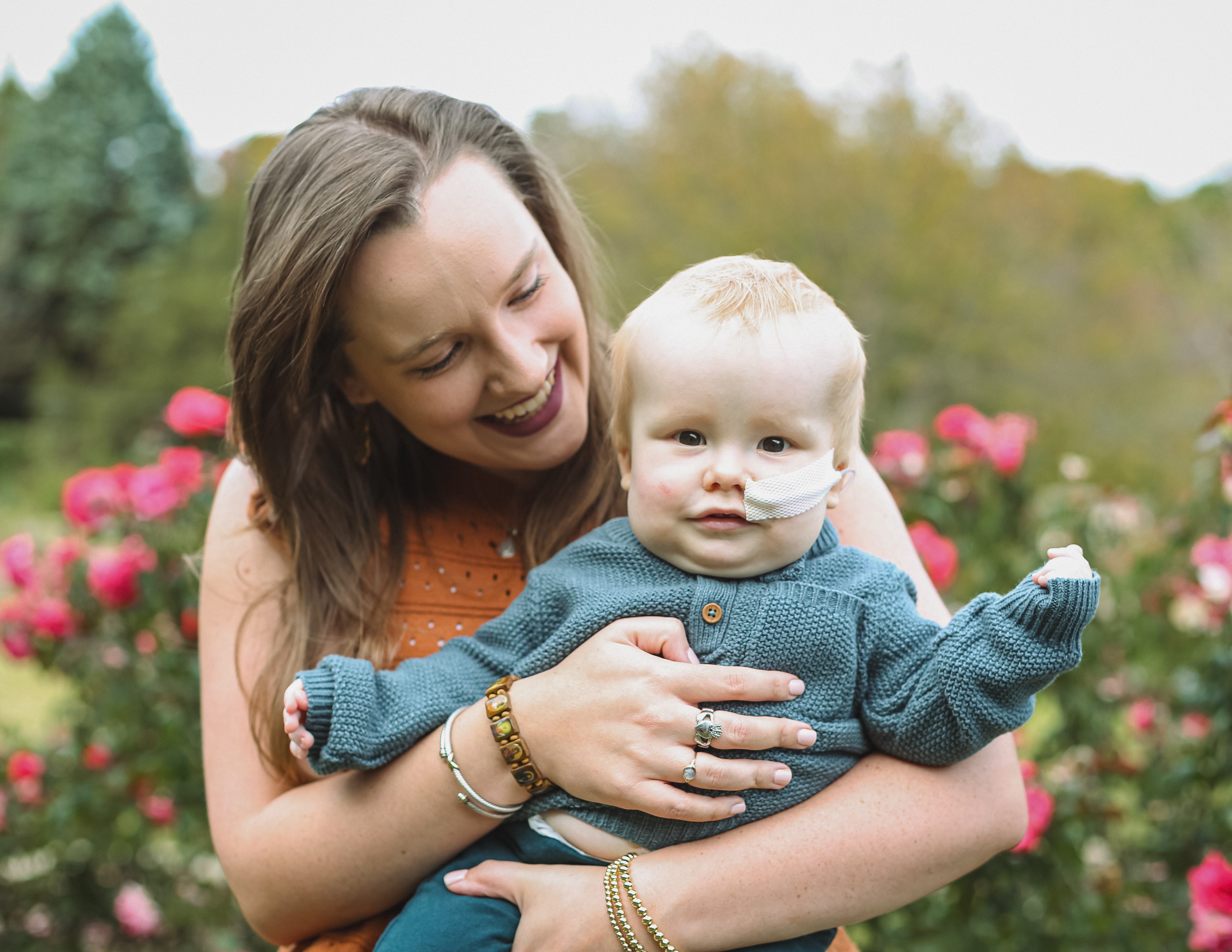
Elizabeth Condra is a young wife and new mother. Her son, who is now sixteen months old, was born with a rare multi-gene deletion disorder. After undergoing genetic testing with her husband to determine whether they were carriers for the genetic disorder, genetic counselors “continuously referenced” IVF, even after Elizabeth and her husband said they weren’t interested in pursuing it, no matter the results.
“Though it wasn’t stated, I believe the obvious implication was that we could pick the embryos that were unaffected and discard the rest, which makes me sick to think about,” Elizabeth told me. “My husband and I mutually agreed that whatever the results, we would not let fear rule our decision to grow our family. Our son is the biggest blessing to us and though having a disabled child is difficult, it would not be the end of the world to have another one. I know that will sound incomprehensible to some, but we believe children are a gift and we want to continue to grow our family.”
If either Elizabeth or her husband were carriers of the gene, there would be a 50% chance it could affect a future pregnancy. Thankfully, Elizabeth and her husband tested negative, meaning their son’s disorder was spontaneous, and any future children would have little risk of developing it.
“From the get-go I was kind of shocked at how IVF was continuously referenced during our genetic counseling appointment. Though the counselor meant well, I think she just kind of assumed that’s the road we’d be taking if we were carrying the mutation and wanted to have another baby. Aside from the obvious financial considerations, we are Orthodox Christians and we do not participate in IVF, and when we shared that, she just kind of brushed it off like we’d change our minds.”
Technically Human is a project examining the moral limits of our reproductive technologies, inquiring whether they contribute to human flourishing or perhaps dehumanize us in some way. I followed up with Elizabeth to dive deeper on genetic testing, disability, and using IVF to screen out undesirable human embryos. Elizabeth spoke of her (perhaps angelic?) son, the impact her Christain faith plays in her bioethical considerations, and how every child — no matter how he or she is brought into the world — is a gift.
Here’s our conversation:
Katelyn Shelton: Tell me a little about when you found out about your son’s diagnosis. Were you pregnant, or was it after birth?
Elizabeth Condra: I’m not sure of percentages or statistics, but I imagine I’m one of a small minority of women who discovered their child’s genetic issues after birth. Strangely enough, I had a completely normal, low-risk pregnancy. I had blood tests and a 22-week anatomy scan, none of which were flagged for concerns. I also have a three-year-old who is developmentally healthy and neurotypical, and I had a healthy pregnancy with her as well.
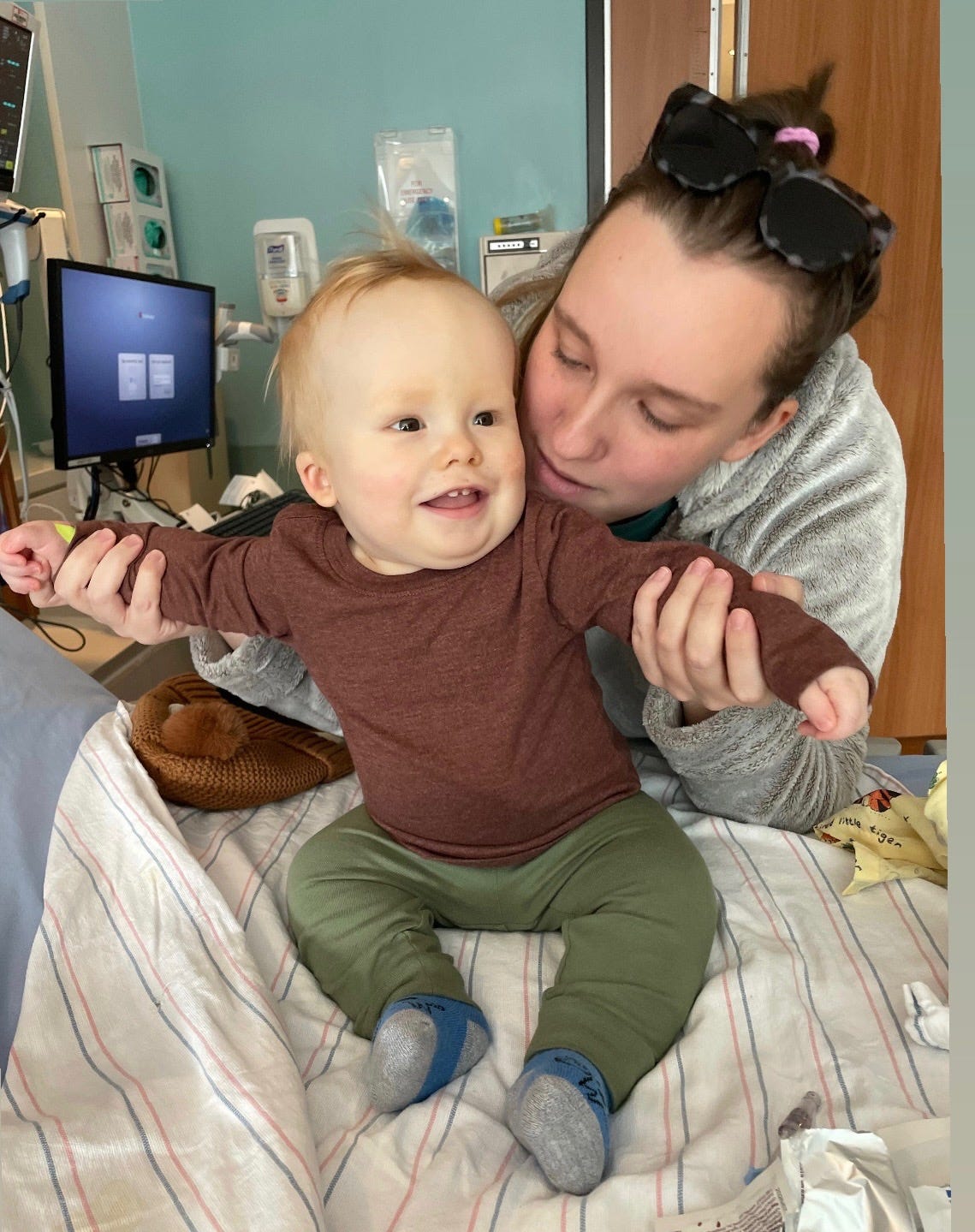
However, it was evident at birth that my son had difficulties, the severity of which wasn’t immediately apparent to us. He had issues with feeding and nursing, and he slept constantly. He also had a visible craniofacial deformity, but we didn’t begin to unravel that until he was around 4 months old. We received his official diagnosis last year when he was 11 months old, after testing and a consultation with geneticists.
KS: Tell me about your son. What are some things about him that make you smile?
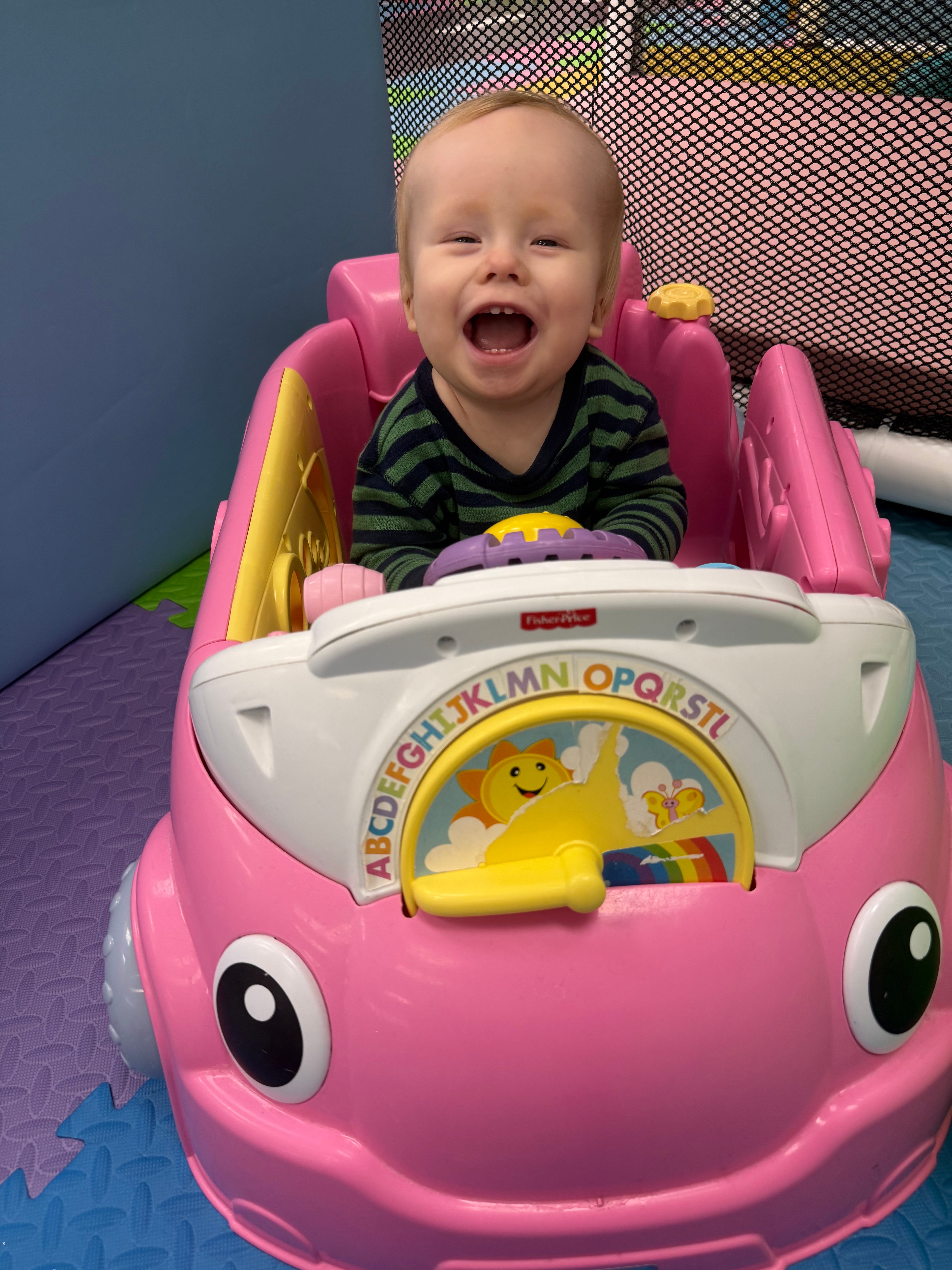
EC: I know that I’m biased, but my son may be an angel. I’ve always been around babies and children my entire life (I’m one of 5!) and I’ve just never seen a baby quite like him. He’s happy and cheerful from sunup to sundown. He loves to play and sing, and he’s a big cuddler, a huge mama’s boy. He has his upset moments, but these are really few and far between. I feel like he makes everyone happier just by being around him, and that’s my favorite thing about him. I can’t imagine our family without him.
KS: Advances in gene editing technology like CRISPR are providing opportunities for some to undergo gene therapy to treat genetic disorders. Baby KJ was a baby born in August 2024 with a severe genetic condition, which was treated with CRISPR and seems to have cured him. What are your thoughts about this technology? Are you hopeful or skeptical of it? Do gene therapies exist for treating your son’s condition?
EC: As far as I’m aware, there are no gene therapies that exist for treating my son’s condition. He has a micro multi-gene deletion syndrome—specifically, he is missing three genes on the arm of his 11th chromosome (Potocki-Shaffer Syndrome, or 11p11.2 disorder).
When it comes to discussions of gene editing and therapies, I would say I am cautiously optimistic. As with any technological or scientific pursuit, I think any scientist considers how it will make individual lives better, but because I’m a Christian, I always have ethical concerns about these technologies, specifically processes like germline engineering. Even the most noble pursuit can have unintended consequences or uses, completely divorced from what it was created for.
However, I am also human enough to know that many special needs parents I now consider my friends are pursuing these therapies with the hope of bettering their children’s lives, and knowing that I would do anything for my son, I understand their pursuit of those options.
KS: Tell me a bit about your pursuit of genetic testing. Why did you and your husband decide to get tested? How did you feel receiving the results?
EC: My husband and I decided to pursue genetic testing after receiving our son’s official diagnosis last fall. We went to a follow-up genetics appointment, and our geneticist there mentioned that it might be something we’d want to pursue if we wanted more children. She asked me point-blank if we wanted more, and I actually broke down then and there, because I do! With the diagnosis and all of the excitement surrounding that, I hadn’t made the next logical step to realizing that if either of us were carrying the mutation, we could potentially have another child with 11p11.2.
Given that our daughter, our eldest, is healthy, I was hopeful from the get-go that our son’s condition is de novo, or spontaneous. My husband and I discussed it at length, and finding out if either of us were carriers seemed like the responsible thing to do. Knowing is half the battle, my husband says. One way I looked at it was that it wasn’t just about us anymore. If the deletion was hiding in one of our families, it could affect my siblings’ children, or my husband’s, potentially, or our daughter’s.
We received our results on January 16th, and we are not carrying the deletion. I think we were both relieved and very emotional from the whole journey. Given the rarity of my son’s disease, it also hits home for me that he was always meant to be part of our family.
KS: You told me that even if you or your husband had been carriers of your son’s genetic condition, you knew you wouldn’t pursue IVF to screen the condition out of future embryos. Why not?
EC: To be honest, this was not even an option for us. For one thing, we believe that intimacy between a couple is sacred and profound, and taking the act of procreation away from us and into a lab is not something we’d ever consider. Additionally, I have a difficult time thinking about my children, half of myself and half of my soulmate, being implanted and dying in me, or sitting in storage for years on end. It’s hard for me to wrap my head around. Because I believe what I believe, I don’t think I’d ever be able to think of them as just ‘embryos.’
KS: You mentioned the genetic counselors assuming you would pursue IVF, even when you said you wouldn’t. Tell me a little about these encounters, and what the underlying rationale seemed to be.
EC: IVF has been mentioned, very casually, I might add, not just by our genetics counselor but by a handful of other doctors we’ve seen for my son’s condition. It’s been treated around us like paying a bill or a dental appointment, just something offhand we could consider and not a huge commitment. These encounters weren’t tense by any means, but the person sitting across from us usually had the attitude of ‘this is the rational thing to do,’ even though we’d never pursue it. I’m sure that to a doctor with a medical degree, that is the normal thing to do, but I believe they think that because they don’t share our worldview or our beliefs, or maybe they’re not used to having patients challenge them.
KS: You mention not wanting to pursue IVF because of your Christian faith. Many Christians participate in IVF. Could you share a bit about why you feel like Christianity is incompatible with IVF? Does your denomination forbid the practice outright, or is your stance based on personal conviction (or both)?
EC: IVF is not outright banned in the Orthodox Church, but it is something a couple would have to have approval from their priest or bishop to pursue.
Similar to what Scripture teaches Christians on sexual purity, I believe many Christians today have an extremely non-committal, watered-down view of the sanctity of human life. I know it may be easy for the average Christian couple or individual to view IVF as relatively harmless or a net positive.
Still, there are very serious considerations that affect a family financially, biologically, and spiritually, such as egg or sperm donation, surrogacy, and the future of embryos. As an individual, I also try to maintain a consistent life ethic (human life is sacred from conception until natural death), and the everyday practices of IVF run directly contrary to that belief.
Jeremiah 1:5 says, “Before I formed you in the womb, I knew you.” God has ordained all lives since before the beginning of time, and any industry that commercializes procreation and seeks to willfully disrupt that sanctity or that ordination is one I have fears about.
Particularly in recent years, even since I had my son almost two years ago, I am seeing more and more normalization of making the most “healthy” children possible through means of embryo selection, even for couples not struggling with infertility or the other reasons that motivate them to pursue IVF. It sounds like a good thing; it sounds like something any caring parent would want for their child. Having a disabled child, I’m envious of families with healthy children.
But at the risk of sounding hyperbolic, this is the same rhetoric Nazis often used in spouting eugenics. Making “healthy” children today will eliminate all those who are deemed unhealthy tomorrow, and I know many would say my son is part of that classification, which is why I feel as strongly about this as I do. All human lives, even those in petri dishes, are made in the image and likeness of God, and are deserving of dignity.
KS: Do you think IVF contributes to human flourishing? What about genetic testing?
EC: Though I have serious concerns about IVF and its proliferation, I have also never dealt with the painful burden of infertility, and I recognize that I speak from a very privileged perspective. Just because I have concerns about it and it’s not something that I would pursue doesn’t mean I think couples who use it are evil, or their children shouldn’t exist. Many of my friends are products of IVF or have used IVF, and because I’m pro-life, I hope that every life is celebrated, no matter the way in which it originated. There is no doubt that IVF has helped couples across the world for decades grow their families, and I hope that in their joy and happiness, they cherish the lives that have survived and mourn the ones that have died.
I believe genetic testing is a positive benefit to our society, when used appropriately for the purposes of gathering information, as it was used in my son’s case, and not necessarily in determining which lives deserve a chance at survival and which ones don’t.
This interview has been lightly edited for brevity. You can find Elizabeth Condra on Substack at Signs and Wonders or on Instagram at @emcee_squared_.
Have you used genetic testing or IVF for screening out genetic disorders in your family? Have you opted not to use them — and if so, why? Share in the comments, or send me a DM for a chance to be featured in Technically Human.
Thank you for reading Technically Human, a yearlong exploration into the moral limits of emerging reproductive technologies. This is the second in a series of interviews and published work on reprotech and what it means to be human. Follow along here on Substack or on X at @annakateshelt, and please consider sharing.
This project is made possible by The Fund for American Studies’ Robert Novak Journalism Fellowship.
Thank you for sharing! It is surprising how casually doctors, even those who aren't even in related specialties, act like IVF is just... what you do if you can't have a kid. When my husband was getting ready for his colectomy, the risk of infertility came up. The surgeon shared that it was unlikely (and it didn't happen -- we're expecting our first now!), but IVF was casually thrown out there. We said we wouldn't -- we're Catholic. It's just odd hearing very intensive, expensive, and morally questionable things treated as a given.
Sometimes I wonder, though, if it's just more common for doctors to be exposed to it and see it as normal. They make more money than many of us, moving in circles that are often a ways above my own, and they likely spend a lot of time around patients who do IVF without question.
You are, of course, entitled to your opinion....and religious interpretations...as you see it.
Where we have problems...is when these interpretations get turned into laws...in effect "enshrining" a particular religious belief into law.
We have a FIRST AMENDMENT that prohibits this.
It might be helpful for you to consider how you feel about conservative interpretations of MUSLIM edicts, head to toe coverings for women, marriages before puberty, honor killings, contempt for infidels.
While NOT UNIVERSAL...they do exist.
How would you like THESE religious interpretations enshrined into U.S. law?
There is NOTHING WRONG with IVF (in my opinion) and it has BLESSED MANY FAMILIES with children...who otherwise...would NOT have them.
Bringing NEW life into the world...is in keeping with Gods plan...either naturally or thru IVF.
Your doctor was, no doubt, protecting his practice, NOT proselytizing.
In this litigious society...the FAILURE to mention IVF could be considered malpractice. Perhaps INSTEAD of assuming some malevolent intent or persona agenda...you should have considered this is standard practice to avoid LITIGATION.
When dealing with people...best to put your MIND READING skills behind, and to assume the best intentions for all.