

Technically Human: Snowflake No. 1
Hannah Strege, The First Adopted Frozen Embryo in the World

Forty-eight years ago, the world’s first IVF baby was born. Her name is Louise Brown. Twenty-seven years ago, the world’s first adopted frozen embryo was born. Her name is Hannah Strege. I interviewed her this week for Technically Human.
Estimates show there are 1.6 to 1.9 million human embryos discarded or preserved indefinitely in America each year, though there are no reporting requirements for human embryos in the United States, so no one really knows for sure. By contrast, abortion claims around 980,000 lives each year, meaning IVF is likely at least twice as deadly as abortion in America. The number of frozen embryos in cryostorage is growing substantially each year.
And there is demand for them. New companies like Orchid Bioscience, Nucleus Genomics, Genomic Predition, Herasight, and others market their technologies to intending-parents as a cure-all: they screen embryos for their liklihood of developing various diseases, or even traits such as height, eye color, or IQ. These technologies rely upon copious numbers of excess embryos, so they can be screened and ranked against each other. No one talks about the embryos that aren’t chosen, or the ones not even deemed viable enough to be considered in the first place.
Hannah Strege was a frozen embryo — Snowflake Number One — who had the good fortune of being adopted, surviving the thaw, and implanting in her adopted mother’s womb. Before she “had a heartbeat in a womb, before [she] had a birth certificate, before [she] had a name, [she] had an inventory number. For two years and nine months, [she] existed in a frozen canister of liquid nitrogen. [Her] legal status was not ‘child.’ [She] was ‘property,’” Hannah writes.
Not all of Hannah’s siblings were so lucky, however. Of the 20 adopted frozen embryos, 14 did not survive the freeze and the thaw, and an additional five did not implant. And then there was Hannah.
Hannah was born in 1998. A few years later, then-President George W. Bush instituted the President’s Council on Bioethics, which sought an answer to the question, “What is the moral status of the human embryo?” This year is the 25th anniversary of the Bush bioethics council, and Hannah played an important role in helping the council envision the humanity of the frozen embryo. But while scientific research largely (though not completely) shifted away from embryonic stem cell research, cultural infatuation with IVF continued to grow, alongside the number of excess human embryos destroyed or abandoned on ice.
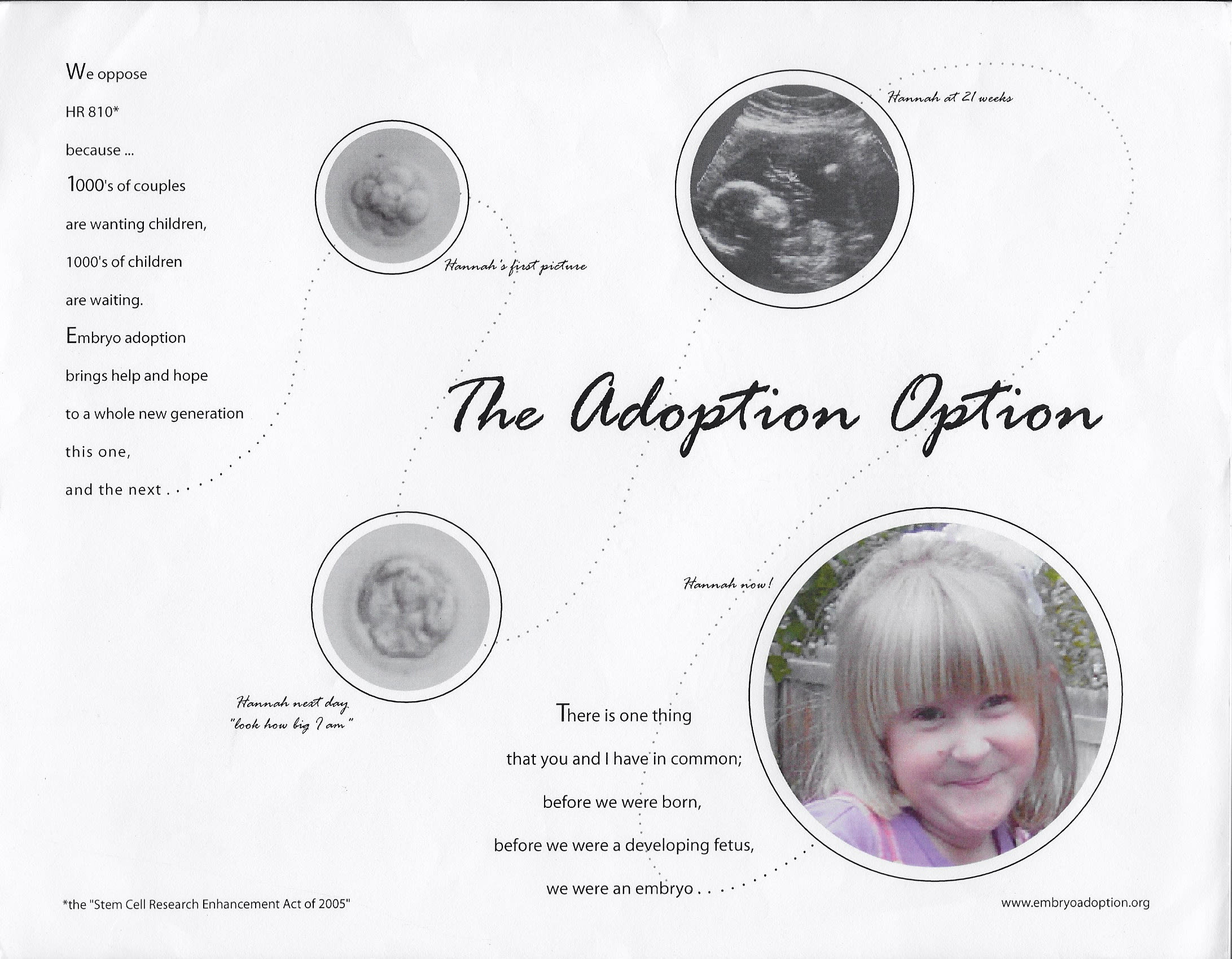
Twenty-five years ago, at the bioethics council’s start, an estimated 100,000 to 400,000 “surplus” frozen embryos existed in the United States. Today, it is estimated that millions to tens of millions of human embryos are held in cryostorage worldwide. Questions about what to do with all these embryos swirl, even as their number continue to exponentially increase. And sensational, dystopian-sounding cases — clinics accidentally destroying embryos, doctors kidnapping embyros, embryos mistakenly transferred to the wrong woman’s womb — are becoming regular. Old hat. Unsurprising.
In the United States, you’d have more protections under our law as a horse or turtle embryo than as a human embryo. And as the number of frozen embryos continue to increase exponentially, the logistical and legal issues surrounding their preservation and disposition become more complicated — and more pressing. But we have a responsibility to these suspended lives. We created them. We need to do justice by them. What does justice look like for the human embryo?
It’s a hotly debated topic. Some would say we should thaw them, baptize them, and give them a funeral. Others say they should be donated to couples seeking children. I wanted to know what Hannah Strege, the world’s first adopted frozen embryo, thought about it. So I asked her what should be done with all the embryos — and what she thought should be done about their creation in the first place. Her answers might surprise you.
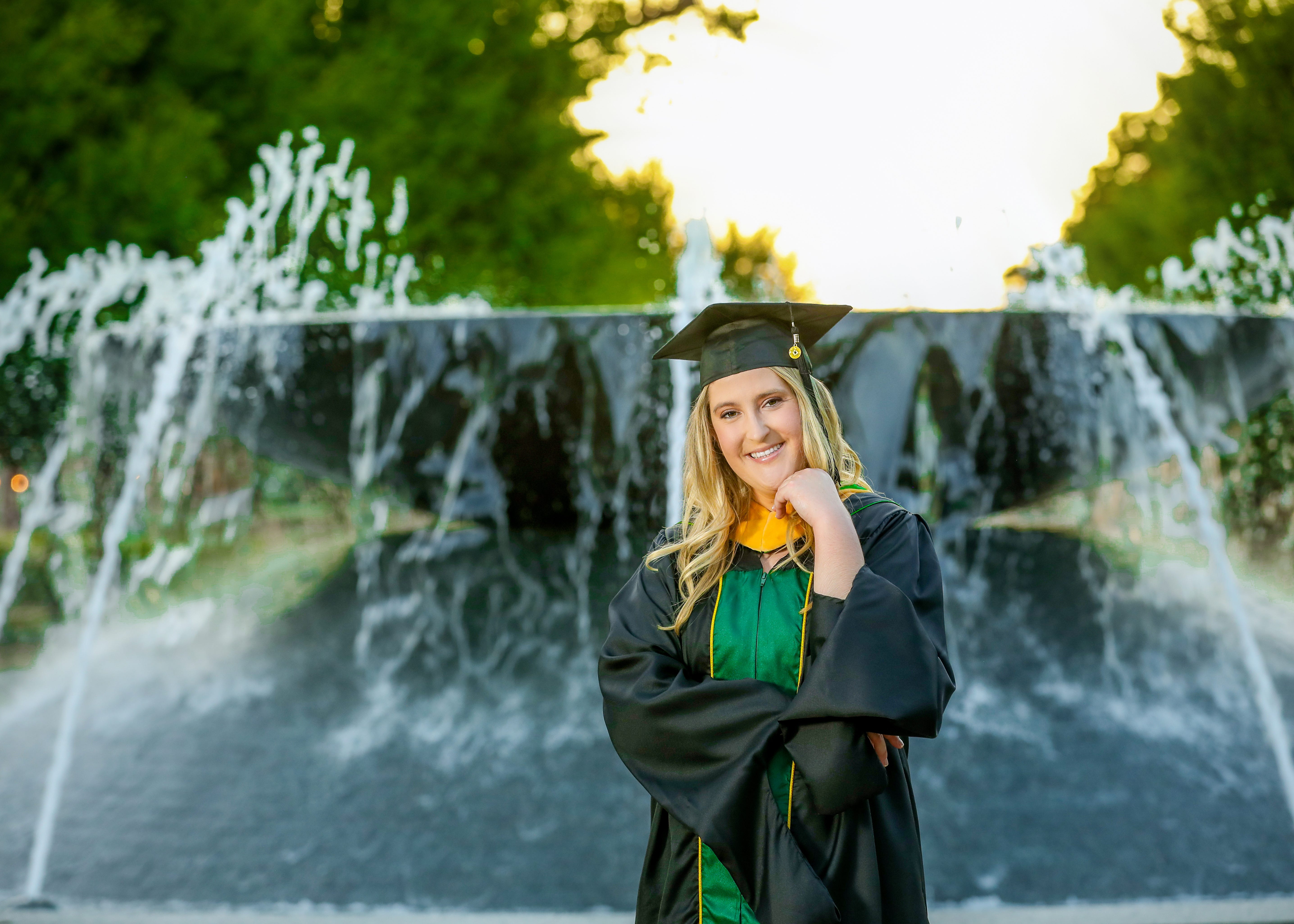
Today, Hannah works full-time as a therapist in Colorado while trying to open her own business and nonprofit, Wonderfully Made Adoption Services International, in defense of frozen embryos. Her deeply-held Christian faith permeated our entire conversation. She hopes one day to provide therapy and consultation to IVF clinics and adoption agencies, to help solidify their embryo adoption programs and put children’s needs first, while also counseling families in the IVF and adoption world.
As always, thank you for reading. Here’s Hannah.
Katelyn Shelton: I'd love to hear a bit about your background and specifically when you first learned that you were a frozen embryo and how you felt.
Hannah Strege: My parents really normalized the whole “adopted as a frozen embryo” thing from as far back as I can remember. I remember my mom would tell me that I’m adopted as a seed and put into my mommy’s tummy to grow. And so my mom did this whole exercise where she bought some seed packets in the mail and we froze some of them and then we didn’t freeze some of them, and then we planted them. And then that was the way she was able to show me that while some of the frozen seeds made it into little sproutlings, and some didn’t, that’s kind of like what happened with me and my siblings. It was just a really easy way to explain it to a child, and it’s something that I ran with. That’s how I explained my story to everybody when I was younger.
KS: Wow, that's really powerful. What did you think when, presumably, some of the frozen seeds didn't make it?
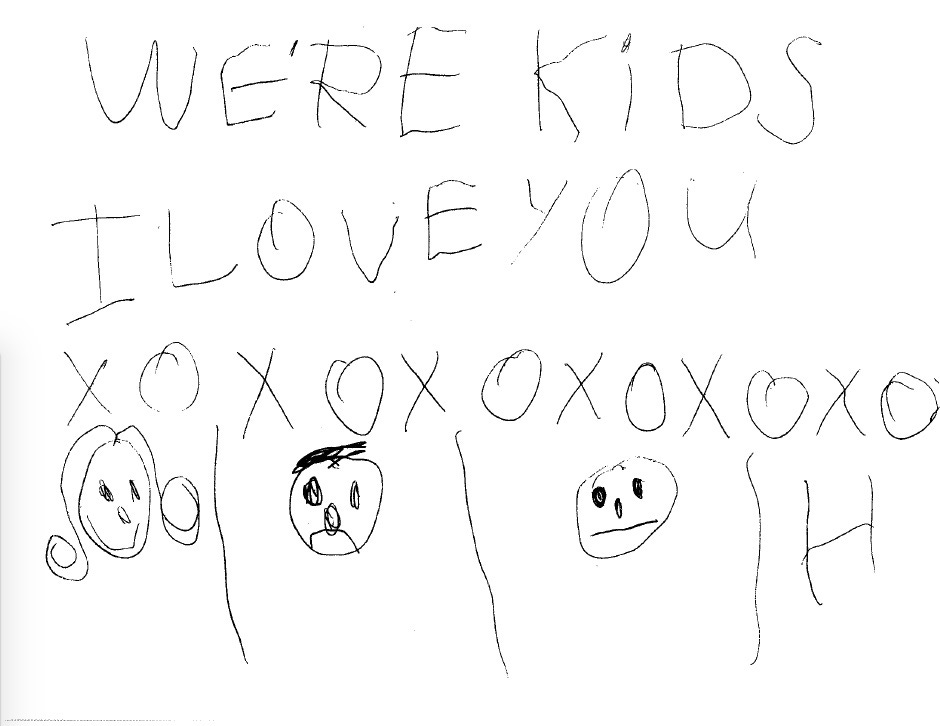
HS: I don't really know if I thought much about it. I was a child, but I did grasp the concept pretty quickly, especially when we went to DC and we were advocating for frozen embryos undergoing embryonic stem cell research. I made a whole poster about that — it was a drawing of me, being adopted, and I was smiling — and then there was a boy with a frowny face, because he didn't survive the freeze and the thaw. And then I drew a child with a straight line face that was like, “Hey, are you going to adopt me? Or are you going to destroy me?” And so I definitely understood the concept very young. That poster was distributed to politicians when I was really little.
KS: Wow, that seems like a lot for a little girl to process. Do you know who your biological parents are, or do you have any contact with your biological siblings — the other frozen embryos who were adopted?
HS: It’s different for everyone, but my adoption was an open adoption. There was an adoption agreement signed, and that adoption agreement was between my adoptive family and my placing family. And so us siblings or embryos aren’t part of that signed agreement. There are some families I know that went through snowflake embryo adoption who have a very wide open door with their genetic family, where they call every day and go on vacations with each other. And then there are other snowflake families that maybe have the door cracked a little bit, where the door is open if they want to ask questions, but they don't really get together. Or maybe they just send letters. And then for me, it's more like we're friends on social media and we text occasionally, but it's really different for everybody.
KS: Do you feel like your genetic family is supportive of your advocacy work on behalf of frozen embryos?
HS: I don't feel like they're unsupportive. I think that they're maybe more neutral about it, or they're just quietly on my side. I am very public in sharing about my story because I feel like God gave me this platform to be open and saving babies this way.
KS: I think you said you were two years old when your dad was carrying you into places like the White House or Focus on the Family or the halls of Congress in Washignton, D.C. Tell me a little bit about that advocacy work, when it began, and then how it’s developed into the work you do today.
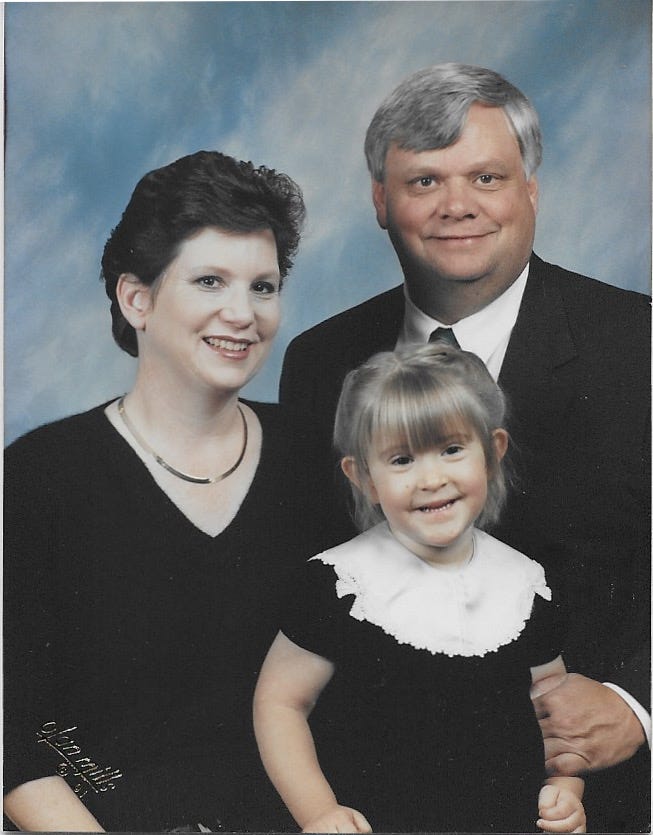
HS: It’s hard to remember since I was so young, but I have snippets of memories, like sitting on my dad's lap while my mom testified before Congress when I was two. And then I have memories of going to the White House. I think I went to the White House four times and met President Bush twice, in addition to advocating in Congress. I remember we did a lot of interviews or we'd have people come to our house and ask me a lot of different questions. We've been studied by psychologists, anthropologists, and sociologists like we're some big museum piece, I guess since people think our family is so interesting. But really we're just a traditional nuclear family. I just had very untraditional beginnings. And I think that's the part people miss a lot when they interview us — we are a traditional family. Nothing about us is different.
KS: Do you feel like people misunderstand you?
HS: I'll get people asking me like, ‘Oh, do you get cold really easily? You were frozen…’ I'm a human girl and I work an eight to five and I went to school like everybody else. And nothing else is different. I think people just really try to fill in the gaps with what they don't know.
KS: I'd like to focus a little bit on how frozen embryos are regarded legally. State by state, embryos are regarded differently. In some states, they are regarded as property, and in some they are regarded as persons. There have been very famous cases like the Alabama Supreme Court opinion in which the judge ruled embryos were people, only for there to be backlash, since saying they’re people would have serious implications for how we treat them. How do you think embryos should be legally regarded?
HS: As a formally frozen embryo, I like to say life begins at fertilization, because if we say conception, we're leaving out the frozen embryos, and those are people. In the state of California where I was born I was considered property, and I was FedEx-ed, literally FedEx-ed on a plane to my parents' clinic from where my biological family lived. I was just kind of considered a “fragile package,” property to be exchanged. And these frozen embryos, they are people — that's just so natural for me to say, that these people deserve to be treated as humans and not property because the last time humans were treated as property in our country was slavery. We need to be mindful that if you're going to be creating a new person, there are complications that come with this. There are things that happen when we play around with creating life, or if we're consenting to sex, we're also consenting to the potential for a child.
KS: The numbers are guestimates since there are no reporting requirements for the creation, preservation, or destruction of human embryos, but some estimates say there are 1.5 million human embryos in cryostorage in the United States. What do you think should be done about all those embryos?
HS: They need to be adopted. And when I say adopted, I mean an actual adoption and not through some donor program. Having a background check, doing a home study, going through adoption classes — all the things that adoption agencies do to help support that adopted child — is needed, and should be a non-negotiable. If you're just going through an IVF clinic and an IVF doctor, and picking embryos from a list based on hair color, eye color, or IQ — that's how you pick your car. It's not how we're supposed to grow our family. That’s what my mom always said. If these are truly human lives, which they are, we need to have standards put in place to protect them. We don't just give children to any old person who asks or pays. You need to have that background.
KS: The lack of regulation surrounding embryo adoption — like surrogacy — is astounding, and is detrimental to children. But embryo adoption only solves for one side of the equation. Copious new embryos are being created and added to that number in cryostorage every day. What should be done about that side of the equation — the supply side?
HS: I really just want people to recognize the humanity of these embryos first. I haven't come outright and said this yet, but I think IVF needs regulation. I think people will still do it if it were banned altogether, but I think IVF reform is possible, and I think IVF can be done ethically with so many caveats. Some caveats might include using only the sperm and egg of a married couple, no freezing embryos, and only creating as many of them as you can parent or transfer immediately. And then if you don't get pregnant, you go back and you make another one. And yes, it might be more expensive to do it that way, and yes, it might take longer, but it’s more ethical than creating as many embryos as you can fertilize or as many eggs as you can fertilize with each cycle. If we look at what my biological mom went through, the doctors retrieved 32 eggs at least, and then fertilized all 32, and then the doctors froze the remainder of us until they figured out what to do with us. So it's quite the conversation, but I do think it can be done ethically.
KS: If you could speak directly to policymakers, what one or two things would you say to them?
HS: I’d tell policymakers that these embryos are not spare parts. These are human beings, and our laws need to reflect that. They need protection because these are people that cannot speak for themselves. And I feel like I might be one of the only voices for these children, and I certainly have a passion for it because I was once frozen. But I'm often just called crazy. Most of the time when I speak out about this, if I'm speaking to people that don't have the same beliefs or ideologies as me, they just call me crazy or say I'm mentally ill for feeling like the other frozen embryos were my siblings that I lost. But you're allowed to grieve siblings that you lost. Because when life begins at fertilization, that's a human being. And so it's just really sad that even in our country, we have to defend those lives. But we should.
KS: I always like to ask my interviewees what technologies excite them. We’re not anti-tech or anti-innovation, just pro-tech and pro-innovation in the right direction. Is there a reproductive technology you’re excited about?
HS: I don't think I'm excited by technology anymore because I've just seen how detrimental especially reproductive technology can be for the child. And when I look at reproductive technology — if we're looking at surrogacy, if we're looking at donor egg and donor sperm, IUI, IVF, just any assisted reproductive technology — we always have to ask ourselves: is this in the best interest of the child, or is it in my best interest? And probably almost ten out of ten of the times it's in the parents’ best interest. And I think that's where a lot of our society is right now.
This interview has been lightly edited for brevity. You can find Hannah Strege on X at @HannahStrege or on LinkedIn.
Do you have a story about a frozen embryo in your life? Or were you one? If so, when did you find out, and how did you feel? Did you have siblings who either didn’t make it, or are still frozen? If so, I’d love to hear from you. Share in the comments, or send me a DM for a chance to be featured in Technically Human.
Thank you for reading Technically Human, a yearlong exploration into the moral limits of emerging reproductive technologies. This is a series of interviews and published work on reprotech and what it means to be human. Follow along here on Substack or on X at @annakateshelt, and please consider sharing.
This project is made possible by The Fund for American Studies’ Robert Novak Journalism Fellowship.
This is really cool. I would like to adopt embryos at some point because I'm 45 and still not married. None of the adoption agencies take over age 42, though.
Fabulous interview! Well done.